Sun-Sat |
See You-In March! |
Welcome to Gateway Garden Center's Plant Database. We are in the process of building our Database therefore it is far from complete. If you do not see a specific plant, please call us at 302-239-2727 to inquire about availability.
Plants are for sale at our Hockessin retail store only, based on availability. As you browse the Database, use the Garden Planner to create a printable list of plants that interest you. Bring your list to Gateway and we will help you with your plant selections.
We are sorry that we do not ship or accept orders over the internet.
|
Common Name: Leadplant
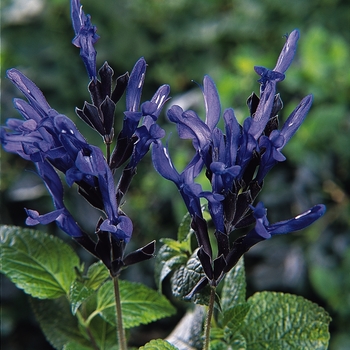
Amorpha canescens is a small shrubby plant that is graced with long spikes of clear purple flowers from July to September. Its long bloom time and attractiveness to butterflies make Leadplant a great native substitute for Butterfly Bush (Buddleia). [ More Information ]
|
|
Common Name: Common Bearberry
Common Bearberry is an evergreen groundcover that is suited to sandy or other well-drained soils with acidic pH. It can be a marvelous solution for a difficult site since it grows where few other plants are happy. Artostaphyllos is lovely draped over the edge of a wall or large rock. Its small green leaves have silver grey backs and often appear to be edged in silver.'Massachusetts' flowers and fruits abundantly and is a disease-resistant selection with smaller leaves than the species. Introduced by west coast growers, but seed for this selection originated in Massachusetts. [ More Information ]
|
|
Common Name: New Jersey Tea
New Jersey tea is a dense shrub that is ideally suited for the edge of the woods or along the back of a border. It's habit is full and its leaves are bright green throughout the summer. Billowing clusters of tiny, fragrant white flowers appear on long stems in late spring and early summer. Ceanothus makes a lovely and fragrant cut flower! Young twigs are noticeably yellow and provide subtle winter interest.
[ More Information ]
|
|
|
Common Name: Low Bush Honeysuckle
A dense, spreading mound of deep green leaves serves as a backdrop for showy yellow flowers appearing in June and July. Diervilla is pest-free and tolerates poor, sandy or rocky soils without flinching. In the fall its capsule-like fruit is a songbird favorite! [ More Information ]
|
|
Common Name: American Witchhazel
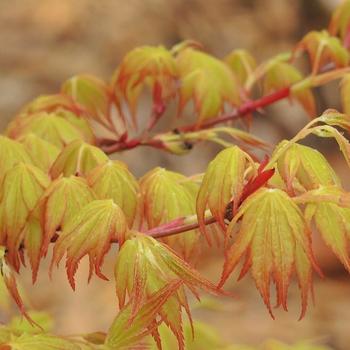
A tall shrub or small tree with fragrant yellow flowers that open in late October or early November providing nectar for migrating insects. It takes a full year for the fruit to mature. When the seed capsule splits open in fall, 1-2 black seeds explode out of it, landing up to 30 feet away. Various birds and wildlife eat the seed after it falls to the ground. Upright spreading branches are perfect nesting sites for a variety of birds. Deep, golden yellow fall leaf color can be outstanding.
[ More Information ]
|
|
Common Name: Oakleaf Hydrangea
Rugged, oak-like leaves cover this rounded shrub and provide the backdrop for huge, pyramidal stacks of white flowers that stand up to 12" above the foliage in late summer. In fall, foliage turns a dramatic deep burgundy while exfoliating cinnamon bark adds interest during the winter months. [ More Information ]
|
|
Common Name: St. Johnswort
This compact, easy-to-grow shrub forms nice masses and should be placed where the bright yellow flowers show to full advantage. The flowers bloom for about 6 weeks and have a showy tuft of yellow stamens. Butterflies, bumblebees, and other pollinators love the nectar. The semi-evergreen leaves are dark blue-green all season and last into late fall.
Benefits:
[ More Information ]
|
|
Common Name: 'Henry's Garnet' Virginia Sweetspire
Fragrant, white flower spikes, 3-6" long, cover the shrub with bloom in early summer. Dark green leaves turn scarlet and crimson in fall, sometimes persisting on the shrub until December. 'Henry's Garnet' is noted for larger flowers and superior fall color to that of the species.
Benefits:
[ More Information ]
|
|
Common Name: Spicebush
This is a wonderful broad, rounded multi-stemmed shrub covered with fragrant yellow flowers in early spring. The flowers open before the leaves emerge and are held close to the branches. Aromatic light green leaves turn yellow-gold in fall. Birds feed on the brilliant red fruits available in late summer on female plants. These berries are one of the best sources of energy for long distance migratory birds.
Benefits:
[ More Information ]
|
|
|
Common Name: Northern Bayberry
Densely held, very aromatic foliage along with a thick branching habit form a wide, flowing shrub that thrives in a multitude of exposures and soils. In the winter birds love the waxy gray berries and the dense foliage for cover while it provides cover for other garden critters year round. [ More Information ]
|
|
|
Common Name: Center Glow Common Ninebark
A mix of toughness and beauty, this fast growing, dense, rounded shrub will turn heads with leaves that emerge a stunning yellowish-green and darken to a reddish-purple. Flattened heads of small, white tinged with pink flowers offer an abundant nectar source for native insects in late spring. [ More Information ]
|
|
Common Name: 'Coronation Triumph' Shrubby Cinquefoil
'Coronation Triumph' is a heavy blooming selection with bright yellow flowers on a dense mounded plant. The flowers bloom from mid-spring until the first frost and are a great nectar source for butterflies and other insects. It offers excellent foliage all season long and has an extremely long blooming period.
Benefits:
[ More Information ]
|
|
|
Common Name: Independense Rosebay Rhododendron
This large native shrub features long, strap-like foliage and spreading, woody branches that form a big, thick, spreading presence. Big buds open in early July, far later than most Rhododendron, with big, beautiful clear pink flower trusses. A superb plant for woodland areas, cover and nesting. [ More Information ]
|
|
|
Common Name: Western Azalea
Large, spreading and deciduous, this shrub features small, oval, glossy green leaves that transition to yellow and red in the fall. Big pink buds open in May to big, beautiful white to light pink, gold blotched flowers in round trusses. Perfect for wooded borders and for songbird cover and nesting. [ More Information ]
|
|
|
Common Name: Red Flowering Currant
This upright shrub jumps out of the landscape in spring with its bright pink to red flowers that emerge before the leaves in pendant clusters attracting butterflies and hummingbirds to its nectar. Dark gray fruits feed many native birds in the winter. Easy to grow even the harshest planting sites. [ More Information ]
|
|
Common Name: Swamp Rose
The single pink flowers are quite pretty and fragrant. They are 2" across, bloom in mid-summer and provide nectar for native bees and butterflies. The flowers give way to smooth red hips (fruit) which are eaten by birds and other wildlife. This attractive plant is perfect for poorly drained, wet soil. This many-branched shrub has gracefully arching branches. Plants will spread slowly by suckers, providing wonderful nesting spots for birds and cover for other creatures.
Benefits:
[ More Information ]
|
|
Common Name: Pussy Willow
Silvery flowers, resembling 1" long bottlebrushes, bloom in late winter. The flowers provide pollen for native bees very early in the season and are conspicuous because they bloom on bare stems, before leaves appear. Finches, grouse and cardinals find the flower buds tasty. Several different butterflies use the blue-green leaves as a larval food source. If planted in dense clumps, this multi-stemmed shrub provides good cover and nesting sites for a variety of birds.
Benefits:
[ More Information ]
|
|
Common Name: 'Adams' Elderberry
American elderberry is a thicket-forming shrub with large flat-topped clusters of small, fragrant white flowers in spring. The flowers are a good source of nectar for small insects. Big clusters of dark purple to black, berry-like fruits follow in late summer to fall. The fruit is an outstanding source of food for birds and other wildlife. The old stems provide over-wintering sites for insects. Birds such as woodpeckers then forage in the clumps for the insects.
Benefits:
[ More Information ]
|
|
|
Common Name: Lowbush Blueberry
Clusters of white flowers bloom in spring, followed by tasty blue berries in summer. The fruit is a favorite among humans as well as birds, small mammals and box turtles. Lowbush blueberry has lustrous blue-green leaves that turn bronze, scarlet and crimson in fall. It grows well in dry, acid soil. [ More Information ]
|
|
Common Name: Lowbush Blueberry
Clusters of bell-shaped, white flowers tinged with red bloom in spring. Flowers are followed by tasty blue berries, which ripen in summer. The fruit is a favorite among humans as well as birds, small mammals and box turtles. Lowbush blueberry has lustrous blue-green leaves that turn bronze, scarlet and crimson in fall. It grows well in dry, acid, nutrient poor soil.
Benefits:
[ More Information ]
|
|
Common Name: 'Blue Jay' Highbush Blueberry
Clusters of dainty, waxy, bell-shaped, white flowers bloom in spring. Flowers are followed by tasty blue berries, which ripen in summer. The fruit is a favorite among humans as well as birds, small mammals and box turtles. 'Blue Jay' is a very vigorous grower with heavy fruit set.
Benefits:
[ More Information ]
|
|
Common Name: 'Northland' Highbush Blueberry
Clusters of dainty, waxy, bell-shaped, white flowers bloom in spring. Flowers are followed by tasty blue berries, which ripen in summer. The fruit is a favorite among humans as well as birds, small mammals and box turtles. 'Northland' has bright green leaves that turn orange in fall. It is also well adapted to a variety of growing conditions. Reddish stems can be attractive in winter.
Benefits:
[ More Information ]
|
|
|
Common Name: Red Huckleberry
An upright, finely branched deciduous shrub, it features loads of small bell shaped flowers hanging in bunches in early May that native insects love. Flowers turn to berries in late summer that are prized by a host of critters. Easy to grow, it's tolerant of sandy soils and will tolerate shade. [ More Information ]
|
|
Common Name: 'Winterthur' Witherod
'Winterthur' is a compact cultivar featuring fragrant white flowers arranged in flat-topped clusters April-May. The flowers provide nectar for butterflies, native bees and other pollinators. Flowers are followed by clusters of rounded berries that change color as they ripen from light pink to deep pink to blue to purplish-black. Glossy dark green leaves turn maroon or dark red-purple in fall.
Benefits:
[ More Information ]
|
|
Common Name: American Cranberry Viburnum
Flat-topped clusters of white flowers up to 4" across bloom in May, providing nectar for butterflies, native bees and other pollinators. Flowers are followed by clusters of brilliant red fruit staying on the plant into late winter when they are finally eaten by birds. New leaves have a reddish cast while fall foliage is yellow through red-purple.
Benefits:
[ More Information ]
|