Email Newsletter icon, E-mail Newsletter icon, Email List icon, E-mail List icon Sign up for Gateway Email
For Email Marketing you can trust
Gift Cards
Garden Center Hours

Sun-Sat

See You-In March!

Directions

Tree: deciduous

Welcome to Gateway Garden Center's Plant Database. We are in the process of building our Database therefore it is far from complete. If you do not see a specific plant, please call us at 302-239-2727 to inquire about availability.

Plants are for sale at our Hockessin retail store only, based on availability. As you browse the Database, use the Garden Planner to create a printable list of plants that interest you. Bring your list to Gateway and we will help you with your plant selections.

We are sorry that we do not ship or accept orders over the internet.


Select Plant Type:
Botanical Name     Common Name
A B C D E F G H I J K L M N O P Q R S T U V W Y-Z ALL
Acer japonicum 'Aconitifolium'
Common Name: Fernleaf Fullmoon Maple
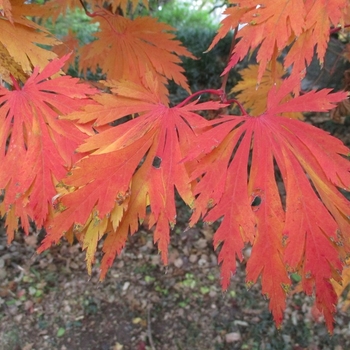
A low branched, small garden tree with deeply cut leaves, the Fernleaf Fullmoon Maple is dark-green in summer. Then in fall, the foliage turns a magnificent array of intense colors; brilliant scarlet shading into purple. Prominent red seeds also contribute to the show. (Iseli Nursery)

Acer palmatum 'Bloodgood'
Common Name: Japanese Red Maple
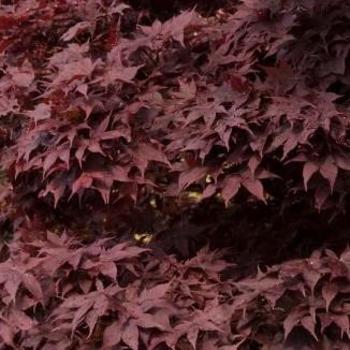
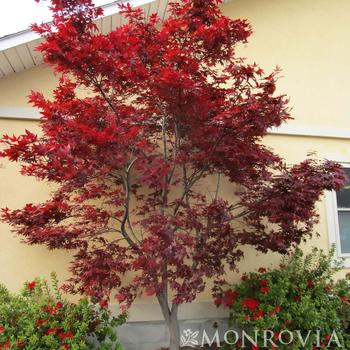
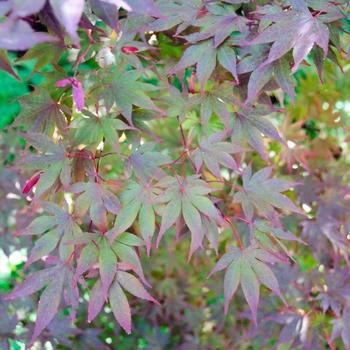
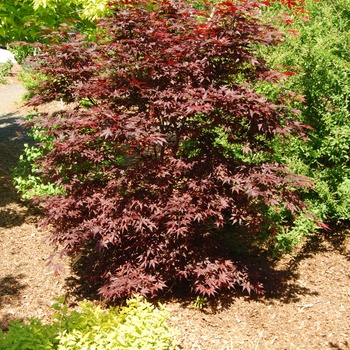
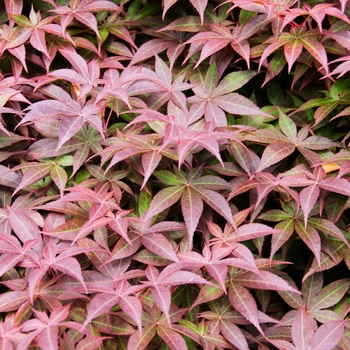
A deservedly popular Japanese Maple, this robust, upright tree has large, deep red leaves that push bright red in spring. Leaves mature to deep, rich purple and retain their color well, even during the heat of summer. Crimson fall color and scarlet, winged seeds add extra interest to this sturdy garden standard.

Acer palmatum 'Butterfly'
Common Name: Variegated Japanese Maple
This vase-shaped tree has small, dainty, variegated (blue-green and white) leaves with a light tinge of pink. In fall, the creamy margins become a blazing magenta. Consider this elegant tree for a dramatic entry planting in full sun or light shade. (Iseli Nursery)

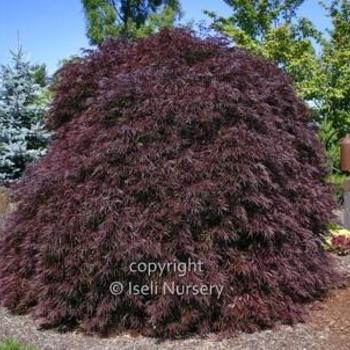
Acer palmatum 'Crimson Queen'
Common Name: Lace Leaf Japanese Red Maple
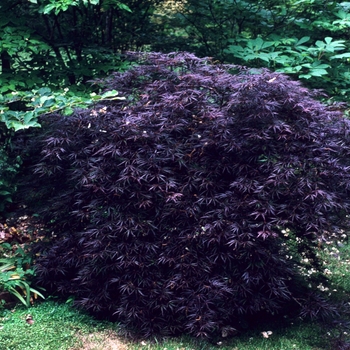
Sculptural, cascading branches and finely dissected, colorful leaves make this classic selection one of the finest of the deep red laceleafs. Foliage emerges bright crimson, deepens to burgundy in summer and finishes with brilliant scarlet in fall, maintaining its color despite summer heat and humidity. The elegant, mounding plant produces a dense, broadly spreading structure that makes a dramatic impact near water, on a bank or in a courtyard scene.(Iseli Nursery)

Acer palmatum 'Emperor One'
Common Name: Japanese Maple
In spring, the leaves of this vigorous tree emerge deep purple-red. They retain the strong red, even tolerating the heat of summer, although shaded inner leaves may appear green. Dark red dominates the fall leaf color, and distinctive, almost black, bark stands out in winter. Discovered and developed by Richard P. Wolfe, Media, Pennsylvania.

Acer palmatum 'Fireglow'
Common Name: Japanese Red Maple
The bright red leaves of 'Fireglow' have a luminescent quality and the best summer color retention of all upright, red palmatums. An intense cherry glow appears in fall. This well-branched Japanese Maple has a moderate growth habit and a broad crown in maturity, so it is appropriate for shading small courtyards and patios. Introduced by Fratelli Gilardelli Nursery, near Milan, Italy. (Iseli Nursery)

Acer palmatum 'Garnet'
Common Name: Lace Leaf Japanese Red Maple
Rich, red-purple foliage distinguishes this vigorous, spreading laceleaf, and its large, broadly dissected leaves maintain their color well despite heat and humidity. With a more upright habit than other mounding types, it is among the largest, so its handsome stature can be used to make a dynamic contribution to larger garden spaces, serving as a focal point or part of a mixed planting. Received Award of Garden Merit from the Royal Horticultural Society. (Iseli Nursery)

Acer palmatum 'Inaba Shidare'
Common Name: Lace Leaf Japanese Red Maple
One of the most vigorous of the laceleafs, this dense, cascading tree displays large, rich, purple-red leaves that hold their color well through summer. In fall, bright-red foliage glows against the lowering sun, and in winter, the distinctive tree shows off bare branches and a silhouette typical of a red dissectum.(Iseli Nursery)

Acer palmatum 'Kamagata'
Common Name: Kamagata Japanese Maple
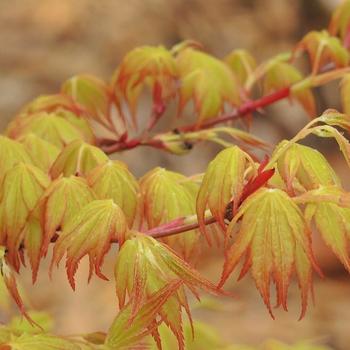
This small, bushy Japanese Maple produces a dense array of branches and finely textured foliage, qualities that make it ideal for courtyard plantings, containers and bonsai. Small, green spring leaves are decorated with red margins; summer leaves are light green; fall changes them again to yellow–orange with an occasional touch of red.(Iseli Nursery)

Acer palmatum 'Kotonoito'
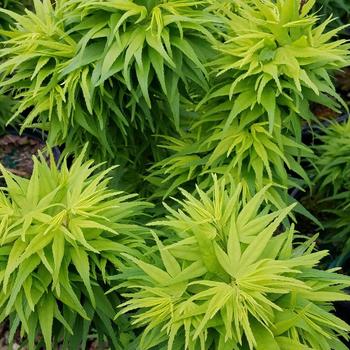
Common Name: Harpstring Japanese Maple
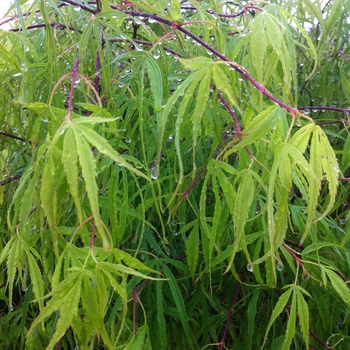
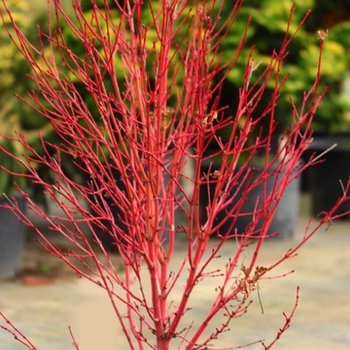
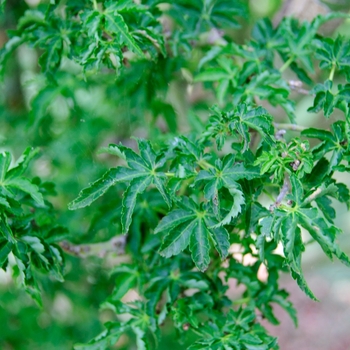
The name 'Koto-no-Ito' means "harp strings", a reference to the string-like quality of this Japanese Maple's narrow, deeply divided leaf lobes.  It also has a dense, twiggy branch structure that works as the harp frame. The unique, divided leaves have a tinge of red in spring, stay green during summer and change to yellow in fall. Bright green bark and a graceful, elegant form carry the show in winter. (Iseli Nursery)

Acer palmatum 'Omurayama'
Common Name: Omurayama Japanese Maple
Spectacular color, highly dissected foliage and an elegant, cascading habit distinguish 'Omurayama' as one of the best of the Japanese Maples. The leaves are nearly as divided as laceleaf cultivars, and the fall display of reds and golds is as dramatic as any. The noteworthy ornamental tree will command attention in gardens large and small. Full to filtered sun produces the best look. (Iseli Nursery)

Acer palmatum 'Orange Dream'
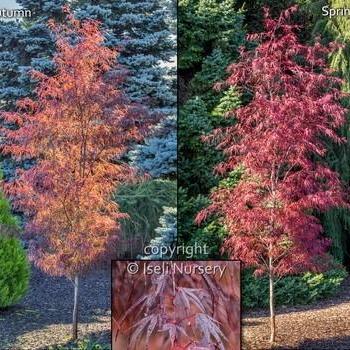
Common Name: Orange Dream Japanese Maple
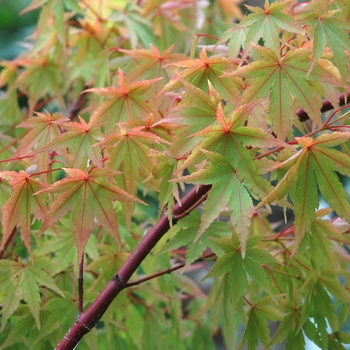
Unusual and infrequently found in the trade, this Japanese Maple cultivar offers both unique form and color. Its upright habit produces a large shrub or a small tree, either of which boasts bright green bark. Plants also show off a chorus of leaf color in shades of pink to orange to yellow that changes from spring through fall. This selection appreciates afternoon shade. (Iseli Nursery)

Acer palmatum 'Rising Sun'
Common Name: Japanese Red Maple
Rising Sun' is a recent Iseli selection with uncommonly large, heavily textured leaves---up to 8" across---that give the tree a tropical look. Its vigorous, multi-branched habit produces sturdy limbs and rigid twigs, and the autumn show of red, yellow, and orange will take your breath away. (Iseli Nursery)

Acer palmatum 'Tamukeyama'
Common Name: Laceleaf leaf Japanese Red Maple
First listed in 1710 in Japan, this extremely vigorous cultivar of superior quality has survived the test of time. Long, cascading branches produce spring foliage that is bright crimson and summer foliage that turns dark, purple-red and retains its color even in hot, humid summers. In fall, the rediscovered tree's foliage, which is bold and more coarsely dissected than other selections, changes to scarlet. The wider-than-tall cultivar performs beautifully by a water feature or enriching a Japanese style garden.(Iseli Nursery)

Acer palmatum 'Tsuma Gaki'
Common Name: Tsuma Gaki Japanese Red Maple (Red Nail)
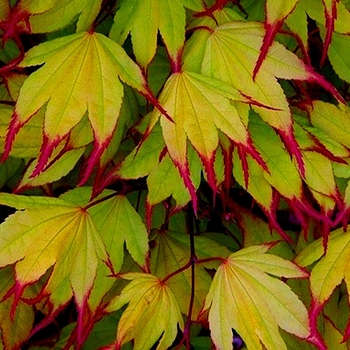
In spring, the soft, pendant chartreuse leaves on this small, rounded tree sport dramatic edges of persimmon red, an effect that looks like many dainty leaf-hands with brightly painted "nails", In summer, the foliage continues to demand attention as it develops wide, deep-red margins and light-cream centers.

Acer rubrum 'Autumn Flame'
Common Name: Red Maple

Acer rubrum 'Red Sunset'
Common Name: Red Maple

Dense clusters of red flowers in late winter offer nectar early in the season. Cardinals, chipmunks and squirrels eat the red, winged "helicopter" fruits. The stems and twigs are reddish; the buds are red; and, in fall, the leaves turn orange-red. 'Red Sunset' is one of the best cultivars available, with outstanding orange to red fall color. Swamp red maple grows faster than Norway and sugar maples, but slower than silver maple.

Benefits:

  • First tree to bloom, drawing all kinds of pollinators
  • Insect eating birds visit the tree to feed on the pollinators
  • Seeds are great food for birds and chipmunks
  • Provides cover and nest sites for all kinds of birds
  • Outstanding fall color and grows in wet soil

Acer saccharum
Common Name: Sugar Maple

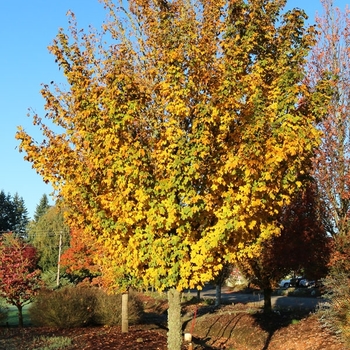
Sugar maple has a dense, rounded crown and is one of the trees responsible for giving New England its reputation for spectacular fall color, as the medium green leaves turn brilliant yellow or red-orange in autumn. The familiar two-winged "helicopter" fruit is a favorite food of chipmunks, and they store it away in winter larders. This is a long-lived tree that grows relatively slowly.

Amelanchier canadensis
Common Name: Shadblow

One of the first native trees with showy flowers to bloom, serviceberry has slightly fragrant, white flowers in drooping clusters that are quite conspicuous because they appear before the leaves emerge. The nectar attracts butterflies and other pollinators. Flowers give rise to very flavorful, purple-black, berrylike fruits relished by both songbirds and people. Edible berries resemble blueberries in size and color and can be used in jams, jellies and pies. The colorful fall foliage is a blend of orange, gold, red and green.

Amelanchier laevis
Common Name: Allegheny Serviceberry
Allegheny Serviceberry is a native tree for all seasons. In April and May it has beautiful white flowers that are delicately scented and provide nectar for the season's early bees and butterflies. In mid summer its fruits ripen to brilliant violet pink, aging to deep blue purple when fully ripe. Its leaves play occasional host to the larvae of viceroy, striped hairstreak, and Canadian tiger swallowtail butterflies. And the grand finale comes in fall with brilliant oranges, yellows and reds as the leaves prepare to drop. Amelanchier laevis is found in moist woods and meadows, but tolerates most any garden situation. It will bloom more in full sun, but have a more open and graceful habit in shade. It is drought tolerant once established, but will grow taller and faster in consistently moist soils. Amelanchier can be grown as a small tree pruned to become a densely branched shrub.

Betula nigra 'Heritage'
Common Name: 'Heritage' River Birch
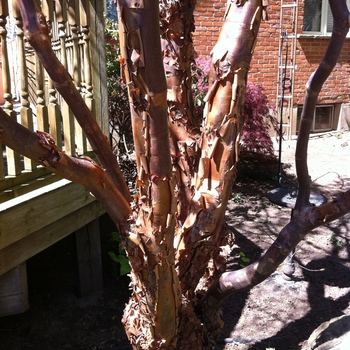
'Heritage' is a vigorous, fast-growing tree with layers of cinnamon, salmon and brown bark peeling back in big sheets to reveal creamy white inner bark. It can be grown as either a single trunk or multi-stemmed tree and is especially effective when multiple trees are placed together in a grove. Chickadees, song and white-throated sparrows, wild turkey, pine siskins, finches and other birds love the seed. Trees also provide great cover and nesting sites. Good yellow fall color and excellent disease and pest resistance. Benefits:
  • Tolerates really wet soil but adapts to drier ground, too
  • 'Heritage' is very fast growing and has outstanding, multi-colored bark for year round interest
  • Larval food source for Mourning cloaks, Canadian tiger swallowtails and dreamy duskywing butterflies
  • Birds and other mammals feed on seed in the winter
  • Provides cover and nest sites for all kinds of birds
  • Extremely resistant to bronze birch borer and leaf spot diseases

Cercis canadensis
Common Name: Eastern Redbud
Leafless horizontal branches are smothered in small deep pink flowers in early spring. Its early nectar and pollen attracts a large number of specialized native bees and butterflies such as elfins. Red-purple, pea-shaped seedpods follow the flowers. The seedpods provide food for doves, ruffed grouse, wild turkey, quail and other birds. The heart-shaped leaves become a quilt of yellow and green in fall. Benefits:
  • Very early to bloom; flowering branches can be used in spring table arrangements
  • Nectar and pollen attracts butterflies and other pollinators
  • Seeds in small pea-pods provide food for birds
  • Good fall color
  • Lovely as a single specimen or multi trunked specimen in masses

  • Chionanthus virginicus
    Common Name: Grancy Graybeard

    A carefree native, this small tree puts on a heck of a show in late spring with thousands of pendulous, delicately fragrant white flowers covering the tree before the leaves emerge. At the end of bloom season, the green leaf tips accent the snowy blooms for an impressive finale. It's no wonder the Fringetree has been a garden favorite and heritage plant for generations! The Grancy Graybeard is dioecious, meaning that there are male and female trees. The males are typically showier in bloom due to their longer petals, however, it is the female plants that are bedecked with dark blue fruit in late summer. Birds relish the fleshy fruit and will find it easily, even though the foliage sometimes hides it from view. The best way enjoy the graybeard is to have at least one of each, and to be certain you get a male and female, purchase them in late summer or early fall when fruit will be present on the female plants. Chionanthus virginicus is an wonderful specimen tree for residential and commercial landscapes. It can also be used in groups of three or more if adequate space is available, and it works well in a border with evergreen shrubs like azaleas. It is right at home in natural settings, surrounded by meadow or as part of a mixed grove. Better flowering occurs where the Graybeard can get a lot of sun, but it is still lovely in a slightly shadey spot, having a more open habit. It prefers well-drained, sandy loam soil of medium fertility, but is tolerant of a wide variety of soils, including red clay. Unfortunately, the Grancy Graybeard is not a tree that is often seen in the marketplace because it is seed propagated and rather slow-growing in its early years. That's a shame because it is a beautiful tree and an enduring landscape plant.

    Cornus florida 'Cloud 9'
    Common Name: 'Cloud 9' Flowering Dogwood

    Flowering dogwood has spreading horizontal branches and distinctive white flowers in spring. The 3" diameter flower clusters bloom mid-April to mid-May, attracting a number of butterflies and other pollinators. 'Cloud 9' flowers profusely and has extra showy, overlapping white bracts. Clusters of glossy red fruit mature in fall and persist into winter when they are eaten by birds. The leaves turn scarlet red in fall.

    Nyssa sylvatica
    Common Name: Black Gum
    Black gum is a stately, slow-growing, deciduous tree with a straight trunk and rounded crown (more pyramidal when young). Small, greenish-white flowers appear in spring and are not showy, but they are an excellent nectar source for honey bees, native bees and other pollinators. Insect-eating birds such as kinglets, phoebes, pine warblers and others visit the tree to feed on the small insects it attracts. Flowers give way to oval, 1/2" long, dark blue fruits that are attractive to a variety of birds. Foliage turns spectacular scarlet, yellow and orange in the fall. Benefits:
  • Heavy nectar producer, drawing all kinds of pollinators
  • Insect eating birds visit the tree to feed on pollinators
  • Excellent fruit for a number of birds
  • Beautiful in the fall with multiple foliage colors on one tree
  • Will grow in wet as well as dry soils

  • Quercus bicolor
    Common Name: Swamp White Oak
    Swamp white oak is a deciduous tree with a broad, rounded crown. The dark, shiny green leaves are silver on the bottom side. Fall color is usually yellow, but sometimes reddish purple. Though ornamentally insignificant, flowers bloom in April attracting pollen-seeking insects that attract migrating vireos, tanagers and warblers in search of a meal. Large acorns mature in early fall providing food for deer, wild turkey, black bear, fox and gray squirrels. Indigenous to moist, bottomland locations, this oak has surprisingly good drought resistance. Benefits:
  • Grows relatively fast for an oak
  • Pollen and emerging leaves attract a long list of pollinators and other insects
  • Insect-eating migrating birds visit the tree looking for pollinating insects at work
  • Acorns are a major food source for a variety of critters
  • Larval food source for many of the dusky wings and hairstreak butterflies
  • Will grow in low, moist areas