Gateway
Garden Club

Members Only Specials

Enter your email address to sign up
for Gateway Gardens Club!

Gift Cards
Coupons
Garden Center Hours

Mon.-Fri.

9-6

Sat.-Sun.

9-5

Directions

Our Plants

Select Plant Type:
Botanical Name     Common Name
A B C D E F G H I J K L M N O P Q R S T U V W Y-Z ALL
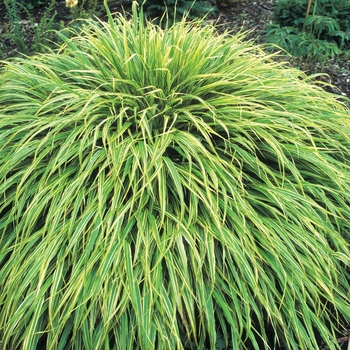
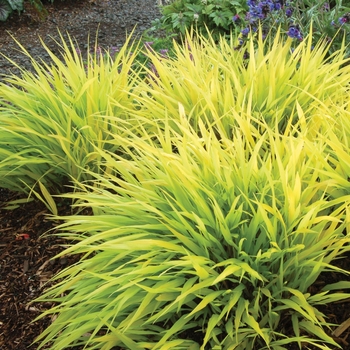
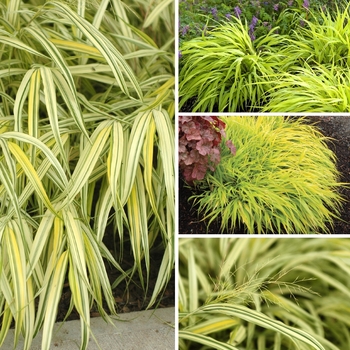
Hakonechloa macra <br> 'Albo Variegata'
Common Name: Hakon Grass
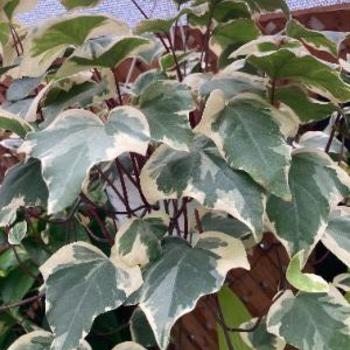
This exceptionally elegant grass deserves a spot in every garden with its graceful habit and easy culture. Narrow stripes of creamy white accent each deep green leaf providing a bright glimmer as the leaves sway gently in the breeze. Taller than other selections, 'Albo Variegata' is also more vigorous and should be planted in groups of three or more for best effect. It is very tolerant of sun if the soil does not dry out, but may be happiest in a bright shaded spot. Airy flowers appear in late summer as the foliage becomes tipped in pink.

Helenium autumnale
Common Name: Dog-tooth Daisy
Our local native with yellow or bronze single daisy-like flowers on stout branched stems in late summer. Petals have distinct tooth-like indentations; hence the common name, Dog-toothed Daisy. All sneezeweeds have three lobed petals which distiguish them from Rudbeckia and other yellow coneflowers. Brown, rust colored fruit appear in fall. Great for cut flowers and the avid butterfly gardener.

Helenium flexuosum 'Tiny Dancer'
Common Name: Sneezeweed
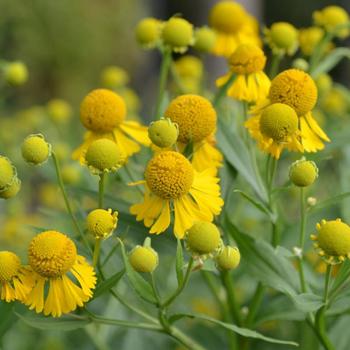
This great floriferous and low-growing native is very attractive in the garden and in flower arrangements. Its delightful brown spherical cones are surrounded by a flowing fringe of bright yellow reflexed petals looking like hundreds of yellow skirted dancers in motion. The foliage is compact and bushy. Tolerant of a wide variety of conditions, H. flexuosum blooms from mid-summer into fall. Native from Massachusettes to Florida.

Helenium x 'Canary (Kanaria)'
Common Name: Sneezeweed
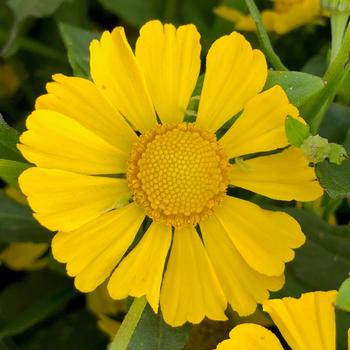
Bright canary yellow flowers surround yellow cones on this great native. Often grown commercially as a cut flower, it has long sturdy stems with branching and many flowers at the top of each. Canary's flowers will last ten or more days in a vase! Great for the avid butterfly gardener. All sneezeweeds have three lobed petals which distiguish them from Rudbeckia and other yellow coneflowers. Cones turn a rich rusty orange in fall and provide seeds for migrating birds.
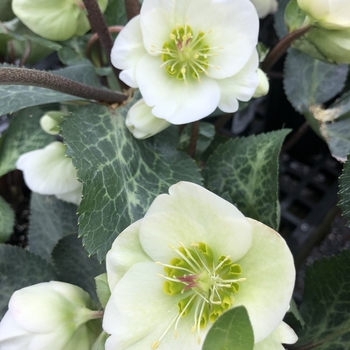
Helenium x 'Cymbal Star (Zimbelstern)'
Common Name: Sneezeweed
With many golden yellow flowers top strong stems, Helenium 'Zimblestern' (Cymbal Star) will definately stand out in the garden! Great for cut flowers and the avid butterfly gardener. All sneezeweeds have three lobed petals which distiguish them from Rudbeckia and other yellow coneflowers. Brown, rust colored fruit appear in fall.
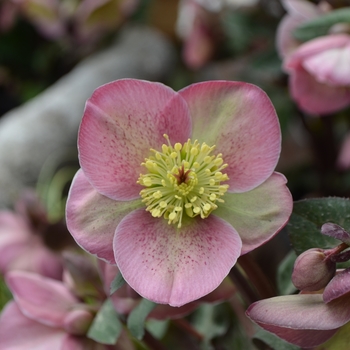
Helenium x 'Dancing Flames (Flammenspiel)'
Common Name: Sneezeweed
Smothered with yellow orange flowers, this Helenium will defiantly stand out in the garden! Great for cut flowers and the avid butterfly gardener. All sneezeweeds have three lobed petals which distiguish them from Rudbeckia and other yellow coneflowers. Brown, rust colored fruit appear in fall.

Helenium x 'Mardi Gras'
Common Name: Helen's Flower
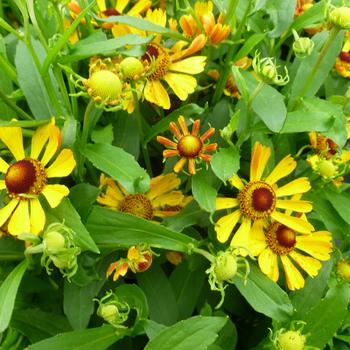
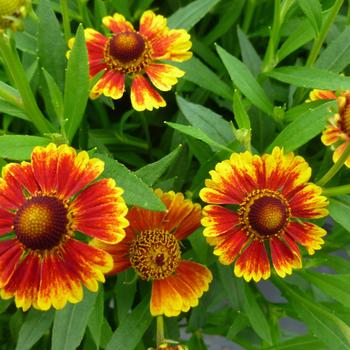
Helenium 'Mardi Gras' produces a festival of multicolored blooms jazzes up the garden for six to eight weeks in mid to late summer. Yellow petals are lavishly edged with bright orange red, aging to clear red edged in gold, all surrounding deep chestnut cones. Gorgeous in a pot! Great as a cut flower, its long stems are sturdy and vase life is long. Heleniums are naturally resistant, even toxic, to deer and rabbits. An early pinch back helps promote branching. Blooms of Bressingham variety.

Helenium x 'Moerheim Beauty'
Common Name: Sneezeweed
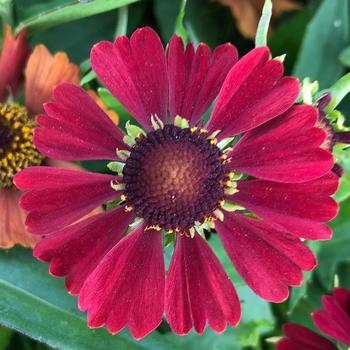
Perhaps the best-loved and most widely grown of the group. Copper red with shades of yellow and orange. Very floriferous and an excellent cut flower.

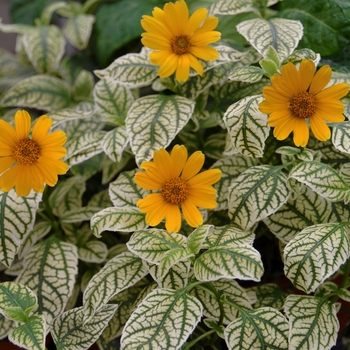
Helianthus angustifolius 'Gold Lace'
Common Name: Swamp Sunflower

Helianthus angustifolius 'Low Down'
Common Name: Dwarf Perennial Sunflower
So, you've never grown this sunflower because it is impossible to keep in a container, right? Not any more! This diminutive version reaches only 18" by the time it blooms, but has the flower power of its 8' cousins. No pinching, staking or cussing required! Helianthus angustifolius is native to rocky hills, roadsides and waste areas, so it is easily grown in any garden or perennial production program.

Helianthus divaricatus
Common Name: Woodland Sunflower
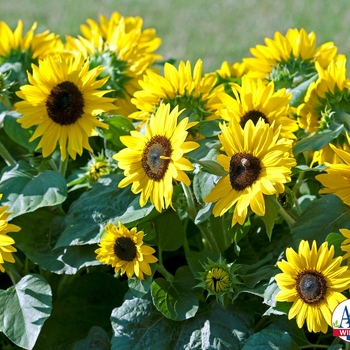
Light yellow flowers in late summer make a handsome display in dappled shade. Parent plant of a number of Helianthus hybrids. Found in open woods, along wood's edge and along streams throughout the US.

Helianthus microcephalus
Common Name: Small-headed Sunflower
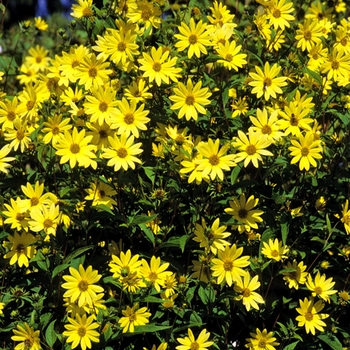
Exciting and distinctive, fine textured sun flower. Smaller features, leaves, 3-4", flowers 1-1 1/4". Refreshing clear yellow color in clumps, from August to September make this one totally irresistable to butterflies and bees. Best of the group.

Helianthus x 'Lemon Queen'
Common Name:
A free flowering plant to brighten up the mid and late summer garden. Covered in intense light yellow single 2-3" flowers from July to September. An irresistable butterfly plant.

Helianthus x multiflorus 'Capenoch Star'
Common Name: Many-Flowered Sunflower
Certainly the most handsome of the perennial sunflowers, a favorite of our good friend Dr. Richard Lighty. Clean deep green leaves give way to large, single, bright yellow flowers that are reminiscent of annual sunflowers with their wide centers. Refreshing and attractive...especially to butterflies and bees. A cross between H. annuus and H. decapetalus.

Heliopsis helianthoides
Common Name: False Sunflower
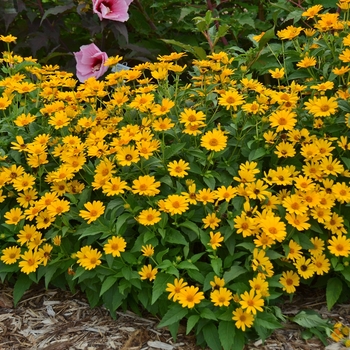
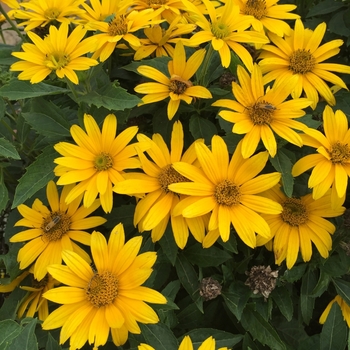
This local native sunflower happily naturalizes in moist or dry donditions. Upright and clump forming with bright, 2", single, medium gold flowers for eight weeks, peaking in July. Imagine, a self sowing butterfly magnet, that also doubles as a birdfeeder in the fall. Excellent cut flower!

Heliopsis helianthoides 'Ballerina (Spitzentanzerin)'
Common Name: Sunflower Heliopsis
A beautiful selection with golden yellow semidouble flowers in mid summer.

Heliopsis helianthoides 'Summer Nights'
Common Name: Oxeye Daisy
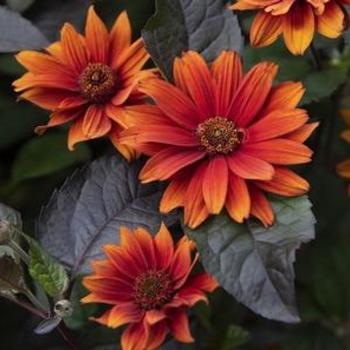
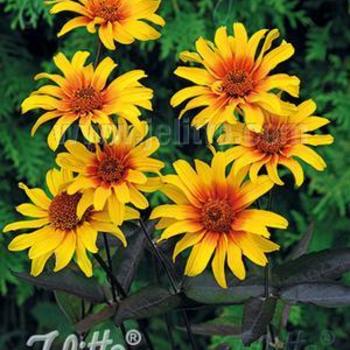
Deep golden yellow flowers with deep mahogony centers top dark red stems and red-tinged foliage. Simply stunning! A North Creek introduction.

Heliopsis helianthoides 'Summer Sun'
Common Name: Oxeye Daisy
This is a tough plant that is easy to grow.This local native sunflower happily naturalizes in moist or dry conditions. Upright and clump forming with bright yellow flowers June through August. Tough and easy to grow. Staking is rarely necessary due to sturdy and strong stems.Very attractive to nectar seekers. Great for cut flowers.

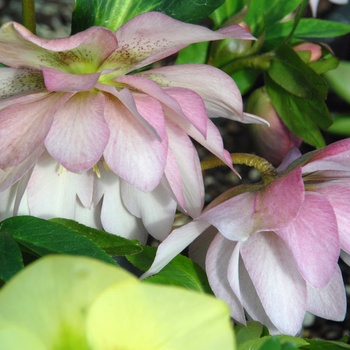
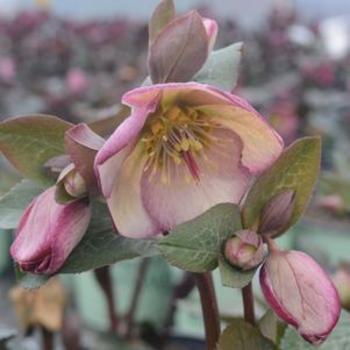
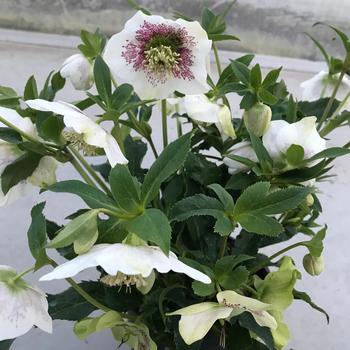
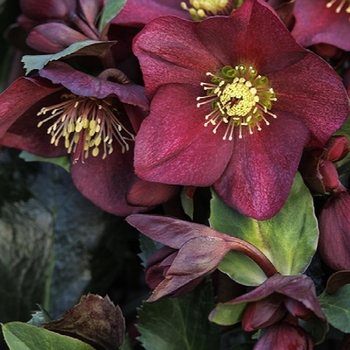
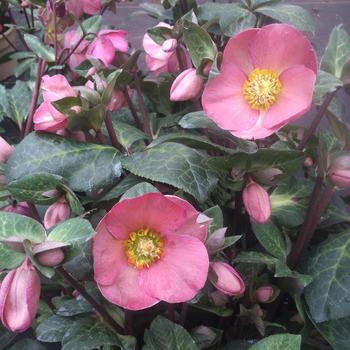
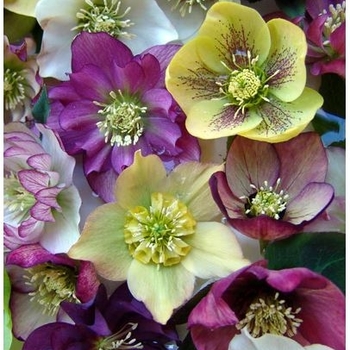
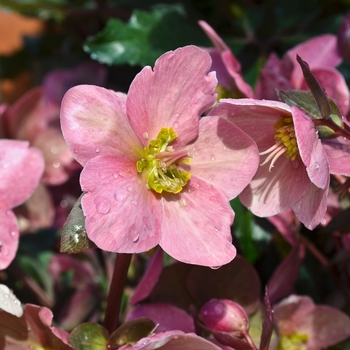
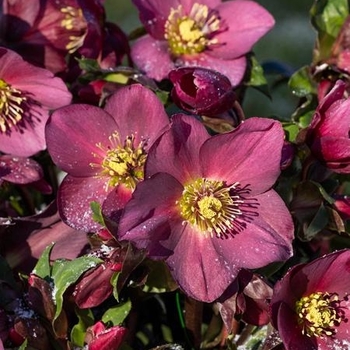
Helleborus Brandywine™
Common Name: Lenten Rose
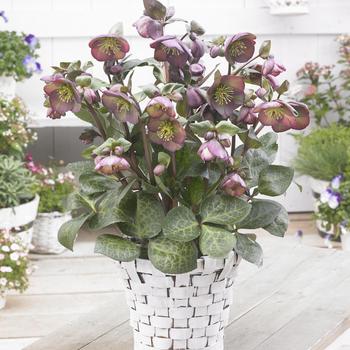
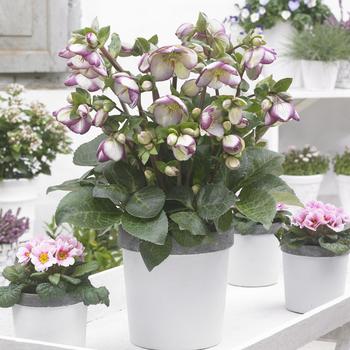
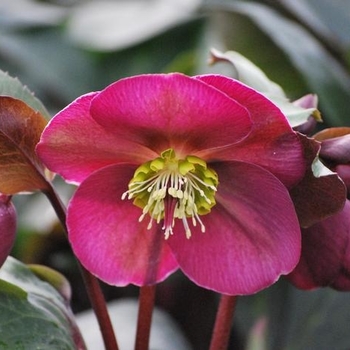
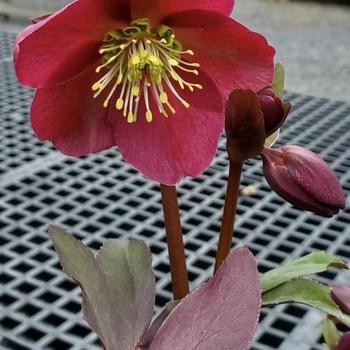
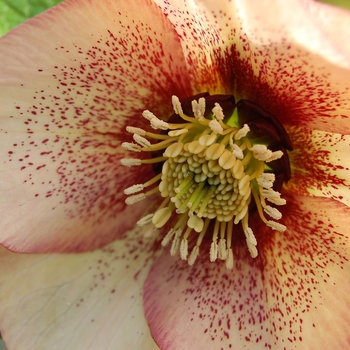
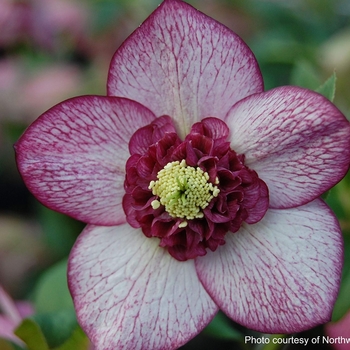
We are delighted to have introduced this magnificent new series from Hellebore breeder David Culp! His 15 years of breeding using rare species and prized selections from collectors and specialty nurseries has produced a premium strain with clear colors and distinctive forms. This group promises plenty of doubles and anemones, as well as dark reds, spotted pinks, picotees, and apricots. A keen eye, hand pollination, and years of careful selection mean beautiful plants for you!

"For the past fourteen years I have traveled to personally hand select parent plants from the best breeders from around the world, including Elizabeth Strangman, Ashwood Nursery, Blackthorn Nurseries, Gisela Schmiemann, and Phedar Nurseries. I journeyed not only for the plants but also to reap the benefits of their knowledge and encouragement. Brandywine Hellebores™ are seedlings that originated in my garden, and are the result of decades of work with these hand selected plants. I've used these tried and true hellebore foundations to build upon, and now my hybrids contain hand-pollinated, open-pollinated and self-pollinated plants. Color and form are the chief focal point of my breeding work, as evidenced by the single, anemone (semi-double) and doubles that abound in this premium mix." ~ David L. Culp

BrandywineHellebores.com


Helleborus foetidus
Common Name: Bearsfoot Hellebore
Intriguing, finely cut, leathery dark green foliage makes an interesting and nearly evergreen groundcover for average to dry shade. Numerous chartreuse bell-like flowers, often rimmed in red, are held above leaves in late winter. One of the first bloomers in spring!

Hemerocallis fulva
Common Name: Tawny Daylily

Commonly known as the tawny daylily for its 5" diameter, tawny orange flowers, this large species daylily has flower scapes that can reach up to 6' tall from a large clump of thick, arching, blade-like, bright green leaves. It is also a superb colonizer that has naturalized in many parts of the country and is commonly seen growing along roads, in alleys, and in old gardens, often in very poor soil.


Hemerocallis fulva 'Kwanso'
Common Name: Tawny Daylily

A naturally occurring variety of the tawny daylily (H. fulva), ‘Kwanso’ is a beautiful diploid daylily with fully double, orange flowers (to 5”) on naked stems (scapes) that typically rise to 4’ tall! It is also a superb colonizer and quite vigorous, though less so than the straight species.


Hemerocallis x 'African Chant'
Common Name: Daylily

The velvety dark-red blooms of this diploid cultivar are large (5” across) and contrast well with their yellow throats. Flowers appear in early June on naked stems (scapes) that typically rise 30-36” tall.  ‘African Chant’ is a nocturnal specimen, which means that flowers begin to open in mid-afternoon and stay open through the evening. This aspect makes it perfect for enjoying after returning from work, with the flowers opening to greet you!


Hemerocallis x 'Always Afternoon'
Common Name: Daylily

‘Always Afternoon’ is a tetraploid daylily that features large (5.5”), mauve-pink flowers with a burgundy eye, lime-green throat, and crimped petals. This fine specimen flowers early and reblooms later in the season; it is also an extended flowerer, in which individual flowers remain open for nearly 16 hours!


Hemerocallis x 'Apricot Sparkles'
Common Name: Daylily

One of only a handful of truly ever-blooming cultivars, ‘Apricot Sparkles’ flowers continuously from late May until frost. It is a diploid daylily that features 3-4” apricot flowers with ruffled edges and slightly yellow throats. As alluded to by the common name, flowers appear to be dusted with diamonds (sparkling in the sun). Flowers bloom on naked stems (scapes) that typically rise to 12-18” tall above a clump of arching, linear, blade-like, green leaves. One of the amazing ever-blooming hybrids bred and introduced by noted daylily breeder Dr. Darrel Apps in his Happy Ever Appster® series.


Hemerocallis x 'Bella Lugosi'
Common Name: Daylily

Considered one of the best purple daylilies available, ‘Bela Lugosi’ is a tetraploid specimen with dark, velvety, purple-black flowers (to 6” across) with lime-green throats. The dark flower color is quite stead-fast even in the brightest sun. Blooms in midsummer and reaches a height of 33”.


Hemerocallis x 'Big Time Happy'
Common Name: Daylily

This ever-blooming, diploid daylily is descended from ‘Happy Returns’, and is equally beautiful. Differing, from its parent by having larger, more recurved, and more ruffled flowers, ‘Big Time Happy’ also inherited some of the best features from ‘Happy Returns’ such as its ever-blooming, drought tolerant, hassle-free nature. Fragrant flowers (to 4” wide) are a soft lemon-yellow with a green throat and appear on naked stems (scapes). As an ever-bloomer, flowering begins in May and continues until frost. One of the amazing ever-blooming hybrids bred and introduced by noted daylily breeder Dr. Darrel Apps in his Happy Ever Appster® series.


Hemerocallis x 'Easy Ned'
Common Name: Daylily

‘Easy Ned’ is definitely easy to grow and makes for a charming addition to your daylily collection. This exquisite diploid cultivar is a late bloomer, bearing spidery chartreuse flowers with a mild fragrance in late summer. Flowers appear on naked stems (scapes) that reach an astonishing 3-3.5’ tall! Foliage is evergreen in warm winter climates.


Hemerocallis x 'Flamingo Fantasy'
Common Name: Daylily

Aptly named, ‘Flamingo Fantasy’ is an exotic diploid gem with fragrant hot pink blooms (4.5” across) that boast eyes kissed with deep rose-purple and glowing lime-green throats. To top it off, petals are ruffled like feathers!


Hemerocallis x 'Going Bananas'
Common Name: Daylily

You’ll definitely go bananas over this incredible daylily selection. Descended from and considered to be an improved selection of the popular ever-blooming daylily ‘Happy Returns’, ‘Going Bananas’ is a diploid cultivar that features fragrant, light-yellow 4” flowers with recurved, overlapping, lightly creped petals and green throats. Flowers appear on naked stems (scapes) that rise slightly above a clump of arching, linear, blade-like, green leaves; each scape amazingly produces 10-15 flowers per season. As an ever-bloomer, the flowers begin in early summer and continues its rebloom throughout summer and into September.


Hemerocallis x 'Happy Returns'
Common Name: Daylily

'Happy Returns' is an ever-blooming diploid cultivar which features 3.5" diameter, ruffled, lemon yellow flowers on naked stems (scapes) typically rising to 18" tall above a clump of arching, linear, blade-like leaves. Mildly fragrant. This floriferous hybrid cultivar first blooms in June with a steady repeat bloom until frost. One of the amazing ever-blooming hybrids bred and introduced by noted daylily breeder Dr. Darrel Apps in his Happy Ever Appster® series.


Hemerocallis x 'Indian Giver'
Common Name: Daylily

‘Indian Giver’ is a striking diploid selection with 4.5” purple flowers, chartreuse throats, and ruffled white edges. The unique blend of colors springing from the centers of the flowers in a starburst pattern almost looks like a hologram or watermark. Beautiful indeed! Flowers are borne in June on naked stems (scapes) which typically rise to 20" tall above semi-evergreen leaves. Reblooms later in the season.

As with all daylilies, one of the most enjoyable daylily-activities is dividing them after a period of years and giving some of the abundance to your friends, family, and neighbors. However, since this particular cultivar is so beautiful, you will definitely want to make sure you have plenty before you give some away (you wouldn’t want to ask for them back!).


Hemerocallis x 'Jen Melon'
Common Name: Daylily

‘Jen Melon’ is a cheery diploid selection that features enormous (7”!) deep golden-yellow flowers with brighter yellow highlights. Very fragrant flowers first appear rather late in the daylily-season, but are quite floriferous and continue to flower until frost.


Hemerocallis x 'Joan Senior'
Common Name: Daylily

One of the most popular of all the white daylilies, 'Joan Senior' is a diploid cultivar that features large, 6" diameter, near white ruffled flowers with lime-green throats. Flowers are borne on naked stems (scapes) which typically rise to 24" tall above a clump of arching, linear, blade-like leaves. Tolerates summer heat and humidity. Winner of multiple American Hemerocallis Soceity (AHS) Awards. This charming selection blooms in the early to mid part of the typical daylily flowering-season and often follows with a repeat bloom in autumn.


Hemerocallis x 'Pandora's Box'
Common Name: Daylily

Once you plant this wonderful selection in your garden, you won’t ever want to remove it! ‘Pandora’s Box’ is a charming diploid selection with fragrant, 4” wide, cream-colored flowers with highly ruffled petals, large cranberry-purple eyes, and emerald green throats. Flowers in early to midsummer and reblooms later in the same season. Evergreen in warmer climates. In our climate it should be cut to the ground in spring, right before the new flush of leaves emerge.


Hemerocallis x 'Pardon Me'
Common Name: Daylily

You’ll have to pardon this wonderful daylily cultivar for being so demanding of people’s attention in your garden! 'Pardon Me' is a vigorous diploid cultivar which features 3-inch diameter bright red, fragrant flowers with yellow-green throats. Flowers appear on naked stems (scapes) which typically rise to 24" tall above a clump of arching, linear, blade-like leaves. This robust cultivar blooms towards the latter part of the typical daylily flowering-season and often follows with a repeat bloom in autumn.


Hemerocallis x 'Plum Candy'
Common Name: Daylily

Another introduction by noted daylily breeder Patrick Stamile, ‘Plum Candy’ features fragrant peach, ruffled flowers (to 4”) with plum-purple eyes and gold throats. A tetraploid daylily rising to a maximum height of 24”, this fine specimen is also an extended flowerer, meaning that individual flowers remain open for at least 16 hours each! Flowers in early-midseason and is semi-evergreen.


Hemerocallis x 'Pudgie'
Common Name: Daylily

‘Pudgie’ is an adorable, compact diploid daylily with plump electric yellow double flowers (to 4.5” wide). The flowers are reliably double, though some single flowers do occasionally arise, and appear on naked stems (scapes) which typically reach only 16” tall. The short stature and compact nature of its foliage as well as the rotund appearance of its flowers both allude to this endearing cultivar’s name. Flowers are borne midseason.


Hemerocallis x 'Pure & Simple'
Common Name: Daylily

With bright, orange sherbet-colored, double flowers (to 5”) with highly ruffled petals rimmed in gold, ‘Pure & Simple’ is simply the best! As a tetraploid daylily, this cultivar is also quite robust and floriferous, flowering in early-midseason and reblooming throughout much of the rest of the growing season. Flowers appear to glow from a distance. Semi-evergreen.


Hemerocallis x 'Pygmy Prince'
Common Name: Daylily

A progeny of the popular ‘Pardon Me’ daylily, this fine specimen is also its tetraploid counterpart. Sharing the best traits of its parent, ‘Pygmy Prince’ also boasts fragrant, bright red flowers with yellow throats, but as a tetraploid it is even more robust! It flowers midseason and, like its parent, follows with a repeat bloom later in early autumn.


Hemerocallis x 'Red Hot Returns'
Common Name: Daylily

A diploid, ever-blooming daylily with cherry-red flowers (to 5”) with contrasting lemon-yellow throats, ‘Red Hot Returns’will certainly spice up your garden’s aesthetic! Flowering continuously from June until frost, this attractive hybrid just never lets you down. It is also an extended flowerer, meaning that individual flowers remain open for an unbelievable 16 hours each! Flowers appear on sturdy, naked stems (scapes) rising to about 28” tall. Semi-evergreen. One of the amazing ever-blooming hybrids bred and introduced by noted daylily breeder Dr. Darrel Apps in his Happy Ever Appster® series.


Hemerocallis x 'Red Razzle Dazzle'
Common Name: Daylily

‘Red Razzle Dazzle’ is a tetraploid daylily with dark-red flowers (to 5”) and a green throat. Wide, ruffled, overlapping petals are often edged in white. Flowers in late summer on naked stems (scapes) arising to 30” tall. Attractive foliage.


Hemerocallis x 'Red Reward'
Common Name: Daylily

A robust tetraploid daylily with scarlet-red flowers (4.5” wide) and a green throat, ‘Red Reward’ will definitely be a rewarding addition to your garden! Flowers in midseason on naked stems (scapes) arising to 29” tall.


Hemerocallis x 'Romantic Returns'
Common Name: Daylily

A beautiful ever-blooming diploid daylily, ‘Romantic Returns’ flowers continuously from June until frost and features 5” ruby pink flowers, with ruffled edges and yellow throats. Flowers bloom on naked stems (scapes) rising to about 24” tall. One of the amazing ever-blooming hybrids bred and introduced by noted daylily breeder Dr. Darrel Apps in his Happy Ever Appster® series.


Hemerocallis x 'Rosy Returns'
Common Name: Daylily

‘Romantic Returns’ is a diploid, ever-blooming, dwarf daylily with fragrant rose-pink flowers (to 4”) with purple eyes and green throats. It flowers continuously from June until frost. Flowers bloom on naked stems (scapes) rising to only about 14” tall. One of the amazing ever-blooming hybrids bred and introduced by noted daylily breeder Dr. Darrel Apps in his Happy Ever Appster® series.


Hemerocallis x 'Ruby Stella'
Common Name: Daylily

The red flowering little sister of the famed ‘Stella De Oro’, ‘Ruby Stella’ makes quite a splash in the landscape. This ever-blooming diploid cultivar features profuse 3” diameter, mildly fragrant, deep wine-red flowers with slightly ruffled edges and yellow throats. Flowers are classified as miniature and are borne on naked stems (scapes) to only 16-20” tall, above a clump of arching, linear, blade-like leaves. As an ever-bloomer, ‘Ruby Stella’ blooms from early June until frost without the need for deadheading. A compact and tidy grower.


Hemerocallis x 'Scarlet Orbit'
Common Name: Daylily

A tetraploid with large (6”) bright red, slightly ruffled, mildly fragrant flowers with radiant chartreuse throats, ‘Scarlet Orbit’ takes it to the stratosphere! A hardy evergreen, this superb selection is also a rebloomer that flowers early and reblooms later in the same growing season. Flowers bloom on naked stems (scapes) rising to 25” tall.


Hemerocallis x 'Siloam Double Classic'
Common Name: Daylily

One of the most popular double daylilies, ‘Siloam Double Classic’ is a diploid specimen that appears almost carnation like in appearance. It exhibits fragrant, 5”, fully double, peachy-pink flowers with green throats. Only about 16" tall, this is a fairly short daylily, but certainly makes a splash in your garden with its enchanting flowers and sweet fragrance in early to midsummer. Also an extended bloomer, individual flowers stay open for nearly 16 hours each day! Multiple award winner.


Hemerocallis x 'Stella De Oro'
Common Name: Daylily

This diploid cultivar features profuse 2.75” diameter buttery-yellow flowers with ruffled edges and deeper yellow throats. Flowers are classified as miniature and are borne on naked stems (scapes) above a clump of arching, linear, blade-like leaves. Blooming from May-August, this multiple AHS award winner has become perhaps the most popular daylily in cultivation in large part because of its compact size, vigorous growth, profuse bloom, and extremely long bloom period.


Hemerocallis x 'Strawberry Candy'
Common Name: Daylily

Aptly named, ‘Strawberry Candy’ is so tantalizing it almost makes your mouth water. Its luscious strawberry pink, ruffled flowers (to 4.5”) with bright raspberry-red eyes replicate the ocular stimulation of creamy salt water taffy at Cape May or Rehoboth! A tetraploid daylily rising to a maximum height of 26”, this fine specimen is also an extended flowerer, meaning that individual flowers remain open for at least 16 hours each! As a rebloomer, ‘Strawberry Candy’ first flowers in midsummer and follows with a repeat bloom later in the same growing season. Semi-evergreen.


Hemerocallis x 'Sue Rothbauer'
Common Name: Daylily

‘Sue Rothbauer’ is a diploid, reblooming daylily that bears ruffled, rose-pink flowers with green throats and pink anthers. Flowers are reliably large (to 6.5”) and quite fragrant. Initial bloom in early-midseason lasts for nearly two months and reblooms later in the season until frost with a very high bud count. Flowers appear on naked stems (scapes) to only 20” tall. Semi-evergreen.


Hemerocallis x 'Sunset Returns'
Common Name: Daylily

Another of the amazing ever-blooming hybrids bred and introduced by noted daylily breeder Dr. Darrel Apps in his Happy Ever Appster® series, ‘Sunset Returns’ is a diploid, ever-blooming, dwarf daylily with large, ruffled apricot flowers (to 4”) with golden highlights. It flowers continuously from June until frost. Flowers bloom on naked stems (scapes) rising to only about 14” tall.


Hemerocallis x 'The Jury's Out'
Common Name: Daylily

A tall, upright, diploid daylily reaching a maximum height of 33”, ‘The Jury’s Out’ has vibrant lemon-yellow, trumpet-shaped flowers to 4.5” wide. The general appearance of this cultivar looks more like a true lily (Lilium) than a daylily! Luckily for us, this incredible hybrid is a rebloomer that flowers late in the daylily season and continues to flower until frost. It also has an extended flowering habit, meaning that individual flowers remain open for nearly 16 hours!


Heuchera americana 'Dale's Strain'
Common Name: Coral Bells
This is a seed propagated strain selected by our very own Dale Hendricks that is really fantastic and excitingly variable. Unique silver-blue marbled foliage accented by white flowers on long panicles in the spring. Excellent drought tolerant ground cover. Foliage display is amazing!

Heuchera micrantha 'Palace Purple'
Common Name: Coral Bells
Deep purple, ivy-shaped foliage is dark green in the fall and fades to bronze green in the heat of summer. This plant has been an industry favorite for many yares and was the Perennial Plant Association plant of the year in 1991.

Heuchera villosa 'Autumn Bride'
Common Name: Hairy Alumroot
Fuzzy, chartreuse to lime green, nearly evergreen foliage erupts in September, with white fountains of pure white flowers, continues until frost. A very easy care plant tolerant of dry shade and a wide variety of conditions. A good, tough exciting meat and potatoes groundcover that doubles as a cut flower! Great for moist shade. Named and introduced by Bluemount Nurseries, Monkton, MD.

Heuchera villosa 'Caramel'
Common Name: Hairy Alum Root
Bred by Thierry Delabroye, Caramel has glowing apricot new growth fading to soft amber by summer. Fall color is an intense salmon red. Its lobed fuzzy foliage typical of H. villosa stays clean. An eastern US native species that is plenty hardy and unsurpassed for longevity, even in the prolonged heat and humidity of the South. Long panicles of creamy white flowers in late summer. Tags will ship unless otherwise requested.

Heuchera villosa f. purpurea 'Bronze Wave'
Common Name: Bronze Wave Coral Bells
A super intro from Charles Oliver of the Primrose Path, this is a native late flowering groundcover. This has much shinier, almost lacquered looking foliage vs. H. villosa 'Purpurea'. Like it's sister 'Autumn Bride', 'Bronze Wave' is sturdy, perhaps an 18", or a bit larger, clump. September-October flowering spikes of small tan flowers. Excellent shade groundcover that can happily compete with tree roots and come out looking good.

Heuchera x 'Blackout'
Common Name: Alumroot
This Dirk Scheys introduction is blacker than Obsidian and apparently a more vigorous grower. Contrasting beautifully with the dark foliage, creamy white flowers appear in June and last well into July. Blackout's compact habit makes it ideal for container production and it produces a marketable pot quickly.

Heuchera x 'Encore'
Common Name: Alumroot
This new Heuchera hybrid starts out with young, deep, rose-purple colored leaves with light silvering, darker veins, and vibrant reddish-purple undersides in spring. They mature to a light rose with a heavy silver overlay and smoky purple veins. Encore is a hybrid between a popular French selection, 'Gloire d' Orleans' and the rock solid 'Caramel. Becky's Note: I have to admit I was skeptical about this one, but it has proven to be the best greenhouse grower of the bunch, easily out pacing all the other new varieties. It also is far more attractive than it appears in its photos and it combines beautifully with ferns, hellebores and carex in a container planting. I think I have a new favorite!

Heuchera x 'Frosted Violet'
Common Name: Coral Bells
Another great selection for the East Coast bred by Charles Oliver of the Primrose Path. With its H. villosa heritage it is vigorous and long lived. Stunningly beautiful velvety purple leaves with darker veins are topped with pale pink pearl-like flowers in late spring. Definitely one of our favorites!

Heuchera x 'Miracle'
Common Name: Alumroot
New from the breeder of 'Caramel', 'Miracle' is nothing short of amazing. It introduces the colors of Coleus to the perennial market! Foliage emerges chartreuse in spring and develops deep red color as it ages, but retains a bright edge throughout the season. Like Caramel, Miracle has H. villosa genes and is tolerant of heat and humidity and overwinters reliably. It is a strong grower and fills a gallon quickly. It's a Miracle!

Heuchera x 'Montrose Ruby'
Common Name: Alum Root
Introduced by Nancy Goodwin of Montrose Nursery in Hillsboro, NC. Apparently a chance crossing between H. 'Palace Purple' and H. americana 'Dale's Strain', planted side by side in her garden. Deep bronze foliage with silver veining and glowing reddish bronze undersides. Stunning red glow during the cooler seasons. One of the best heucheras, certainly the most durable as a landscape plant. We've been neglecting a clump for 8 + years and it has been drought tolerant and dependable.

Heuchera x 'Plum Pudding'
Common Name: Alumroot
Shiny, dark purple-red ruffled leaves with faint silvery marbling between the veins accented by attractive, delicate heads of pink flower clusters held aloft by by tall, thin stems in early and mid summer. Fast growing with a tidy, mounding habit. Destined to be very popular.

Heuchera x 'Silver Scrolls'
Common Name: Alumroot
Rounded, metallic silver leaves are bordered and veined with deep wine red. Flowers are tiny, white, tinged with pink blooming profusely in the spring. Very trim and tidy habit, forming a neat mound. Remains vigorous and attractive even through the fall and winter. Exceptionally vigorous in a gallon pot! A Prodigious intro from our friends at Primrose Path.

Heuchera x villosa 'Brownies'
Common Name: Hairy Alumroot
Crinkled leaves of chocolate brown have leaf tips that curl up exposing glimpses of plum undersides. Easily two feet wide, it is the largest of the Delabroye group, and likely the largest Heuchera you will grow!

Heuchera x villosa 'Citronelle'
Common Name: Hairy Alumroot
A happy accident in the production of Heuchera Caramel, Citronelle brings the vigor of the villosas to bright chartreuse folliage for shade. A strong grower with incredible pot presentation, it will delight your customers!

Heuchera x villosa 'Mocha'
Common Name: Hairy Alumroot
The darkest of the new H. villosa hybrids from Thierry Delabroye, Mocha is a stunning rich purple that deepens in summer sun. Compact, with nicely arranged foliage, it shows very well in a container and makes an elegant and long-lasting addition to the garden.

Heuchera x villosa 'Tiramisu'
Common Name: Alumroot
'Tiramisu' is another very showy H. villosa hybrid from Thierry Delabroye, who rocked the perennial world with 'Caramel'. The foliage of Tiramisu is chartreuse with deep plum red veining that fades to amber in the heat of summer, but returns to deep red in the Fall. 'Tiramisu' has a compact and full habit, so it presents well in containers and looks full and suppresses weeds as a groundcover. Unique and gorgeous!

Hibiscus coccineus
Common Name: Swamp Hibiscus
Deep red flowers with a lush tropical appeal. Red-purple stems and deeply cut maple-like foliage that waxes redder through the late summer and fall. The wetter the site, the taller it grows.

Hibiscus moscheutos
Common Name: Swamp Rose Mallow
This shrublike herbaceous perennial is a vigorous grower with large glabrous leaves and 4-5

Hibiscus syriacus 'Aphrodite'
Common Name: Rose of Sharon
The landscape qualities of H. syriacus have been enhanced by the development of triploid cultivars with compact growth habit, leathery, dark green leaves, little or no seed production, and abundant continuous flowering. 'Aphrodite' extends the flower color range of the triploid H. syriacus cultivars. Developed by Donald R. Egolf with his first triploid introduction, 'Diana'. Plants flower from June to September. Highly tolerant to air pollution and drought.

Hibiscus syriacus 'Blue Satin'
Common Name: Rose of Sharon

Hibiscus syriacus 'Bluebird'
Common Name: Rose of Sharon

Hibiscus syriacus 'Blush Satin'
Common Name: Rose of Sharon

Hibiscus syriacus 'Diana'
Common Name: Rose of Sharon

Hibiscus syriacus 'Helene'
Common Name: Rose of Sharon

Hibiscus syriacus 'Lavender Chiffon'
Common Name: Rose of Sharon

Hibiscus syriacus 'Red Heart'
Common Name: Rose of Sharon

Hibiscus syriacus 'Violet Satin'
Common Name: Rose of Sharon

Hibiscus x 'Blue River II'
Common Name: Rose Mallow
This shrublike herbaceous perennial is a vigorous grower with 10

Hibiscus x 'Crown Jewels'
Common Name: Crown Jewels Hibiscus
The most compact Hibiscus from the Fleming Brothers is a shrub-like hardy perennial and a vigorous grower with 10

Hibiscus X 'Disco Belle Red'
Common Name: Rose Mallow

Hibiscus x 'Fantasia'
Common Name: Rose Mallow
This is several breathtaking hibiscus hybrids that have resulted from years of work by the Fleming Brothers. Huge lavender flowers, which are thicker than most, with ruffled edges on compact, rounded plants with maple-like leaves. Great form and a prolific bloomer!

Hibiscus x 'Fireball'
Common Name: Fireball Hibiscus
This shrublike hardy perennial is a vigorous grower with purple foliage and 10

Hibiscus x 'Kopper King'
Common Name: Rose Mallow
Marvelous copper-red, deeply dissected leaves, large creamy white flowers with bright red eyes that straeks out through the veination. Foliage color and flower count are better in full sun and consistantly moist soil, though it does tolerate dry periods. Very dramatic. Another winner from the Fleming Brothers!

Hibiscus x 'Lady Baltimore'
Common Name: Rose Mallow
Large delicate pink cone-shaped flowers with a satiny red eye, mid summer to frost. Stunning! Definetely a

Hibiscus x 'Lord Baltimore'
Common Name: Rose Mallow
A profuse producer of large crimson red ruffled flowers from July to frost. One of the best pure red hibiscus. Deeply cut tropical foliage. Makes a stunning accent plant! Hybridized by Robert Darby.

Hibiscus x 'Moy Grande'
Common Name: Rose Mallow
Huge rose pink flowers on the cleanest foliage of the bunch. Very striking! Blooms from mid-summer to frost. Bred by Mr. Ying Doon Moy formerly of the San Antonio Botanical Center. A cross between H. grandiflorus and H. mocheutos.

Hibiscus x 'Plum Crazy'
Common Name: Rose Mallow
Marvelous purplish, deeply dissected leaves, large plum pink flowers with darkes eyes. Foliage color and flower count are better in full sun and consistently moist soil, though it does not tolerate dry periods. Another dramatic winner from the Fleming Brothers!

Hibiscus x 'Robert Fleming'
Common Name: Rose Mallow
Elegant, velvety deep red flowers are plentiful atop a compact and densely leaved plant. Easily the darkest red available, and at only 3' tall, it is one of the best selections for containers. It is stunningly beautiful when in bloom. (Tags will ship unless otherwise requested.)

Hibiscus x 'Royal Gems'
Common Name: Rose Mallow
Wonderful blooms of brilliant pink grace this compact hybrid from mid to late summer. Foliage transitions into a deep purple when in full sun, providing lovely contrast to the bright, showy flowers. Another great container perennial from the Flemings, it reaches only 3' tall and branches beautifully. (Tags will ship unless otherwise requested.)

Hibiscus x 'Sweet Caroline'
Common Name: Rose Mallow
Exceptionally lovely flower buds open to slightly ruffled bright pink flowers with darker veins and center. Blooms the longest of all of our hybrids. Flower buds resemble roses. Many thanks to Harold Winters for this marvelous selection. Outstanding!

Hibiscus x moscheutos 'Torchy'
Common Name:
Hardy, deep red blossoms take on a thick, ruffled appearance as they unwind, reaching up to 12 inches across. Bright green, tri-lobed foliage provides an eye-catching contrast against upright, warm season grasses; foliage later transitions to a fall yellow. Fleming Hardy Hibiscus are easy to grow, and adapt to most conditions. Another Fleming Hybrids™ masterpiece!

Hypericum calycinum
Common Name: Aaron's Beard
A widely used and attractive evergreen groundcover which is dense, but not invasive. Deep green, oval leaves and 2" gold flowers with pincushion-like- center-clustered stamens in late spring and early summer. One of the nicest groundcovers when in bloom. Most content in cooler areas away from drying winter winds, although quite tough once established.

Hypericum calycinum 'Brigadoon'
Common Name: Aaron's Beard
A bright new foliage color for shady sites! Golden yellow, oval leaves with reddish edges support 2" gold flowers with pincushion-like center clustered stamens in late spring and early summer. You will hardly notice the flowers in the sea of gold foliage. This plant is most content in cooler areas away from drying winter winds, although once established it is quite tough. Prefers loose, well drained soils in full to partial sun