Gateway
Garden Club

Members Only Specials

Enter your email address to sign up
for Gateway Gardens Club!

Gift Cards
Coupons
Garden Center Hours

Mon.-Fri.

9-6

Sat.-Sun.

9-5

Directions

Our Plants

Select Plant Type:
Botanical Name     Common Name
A B C D E F G H I J K L M N O P Q R S T U V W Y-Z ALL
Panicum amarum 'Dewey Blue'
Common Name: Switch Grass
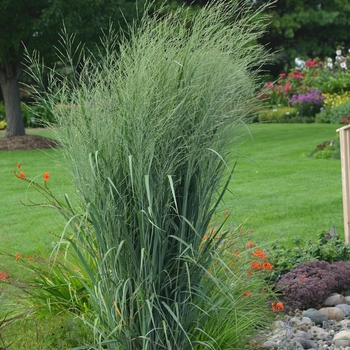
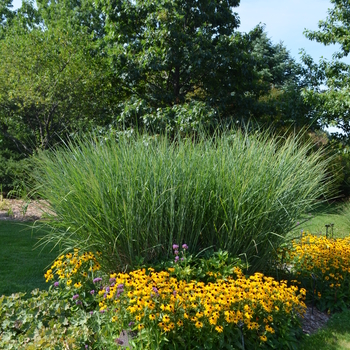
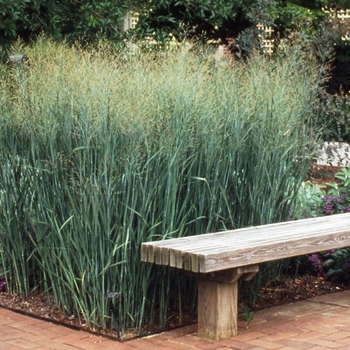
This smooth, blue tinted grass can grow as tall as 4' and spreads slowly through it's rhizome growth forming clumps. It was selected for its glaucous blue color, and graceful fountain habit. The flowers are airy, emerging in the fall, and persistingas a light beige color throughout the winter. Selected and named, by Rick Darke, for the lower Delaware beach town that bears its name. Native along the shores from Liousiana to Connecticut. It is adapted to dry, sterile locations where it plays an important role in stabilizing.

Panicum virgatum
Common Name: Switch Grass
An upright landscape grass with lovely blue green foliage that turns yellow in fall. In late summer airy wheat-colored flowers appear and remain attractive well into fall. It is an undemanding native grass suitable to any soil type. Tough and easy to grow!

Panicum virgatum 'Cloud Nine'
Common Name: Switch Grass
A large and stately native grass with a vase-shaped habit and sturdy upright blades. In late summer it blooms in huge clouds of silvery fawn that remain attractive into the winter. Simply spectacular waving in the breeze!

Panicum virgatum 'Dallas Blues'
Common Name: Switch Grass
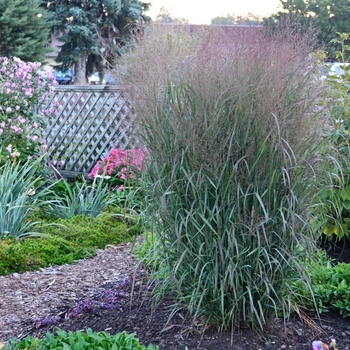
Selected by Ken and Linda Smith of Change of Scenery Nursery in Columbus, Ohio. This variety has a deeper pink, fuller shape and wider blades than others, not unlike Miscanthus with huge, basketball sized (2' or more !) flower heads with a layered habit that are more substantial and longer lasting than other switchgrass cultivars, offering better winter interest.

Panicum virgatum 'Heavy Metal'
Common Name: Blue Switch Grass
A compact upright landscape grass with blue foliage and a tidy habit. In late summer airy silvery flowers appear and remain attractive well into fall. It is an undemanding native grass suitable to any soil type. Tough and easy to grow!

Panicum virgatum 'Northwind'
Common Name: North Wind Switch Grass
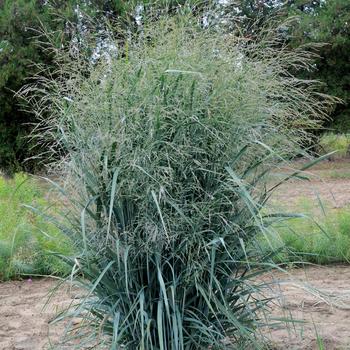
Wow! An unequivocally upright steel blue panicum selected by Roy Diblik of Northwind Perennial Farm in Springfield, WI. It was the only one of our 13 trial varieties still standing after Hurricane Floyd! And the drought of '99? No problem. Wide, thick leaf blades are a bit more substantial than those of the other blues. A golden yellow color in the fall.

Panicum virgatum 'Shenandoah'
Common Name: Red Switch Grass
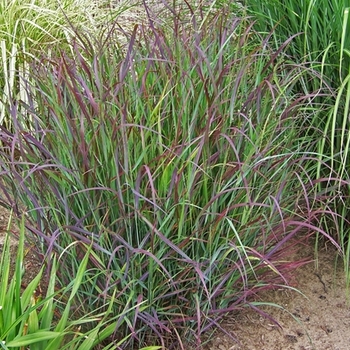
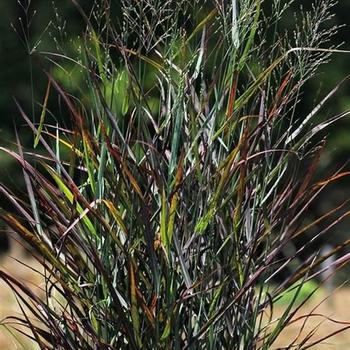
The brightest red Panicum by a long shot. Experienced horticulturalists have mistaken it for Imperata at first glance. It colors up by June and the flowers are also red. The shortest of the group and also the slowest grower, perhaps due in part to its lack of chlorophyll. This will probably be the most popular Switchgrass ever! Introduced by Dr. Hans Simon of Germany. Nothing comes close to the fall color displayed by this grass!

Pennisetum alopecuroides
Common Name: Fountain Grass
A tidy rounded growth habit and finely textured foliage make this one of the most popular Pennisetum cultivars. Orderly tufts of foliage are topped in late summer with fuzzy cream-colored blooms. A trouble-free and reliable garden plant that provides structural accents.

Pennisetum alopecuroides 'Hameln'
Common Name: Dwarf Fountain Grass
A compact growth habit and finely textured foliage make this one of the most popular Pennisetum cultivars. Tidy tufts of foliage are topped in late summer with fuzzy cream-colored blooms. A trouble-free and reliable garden plant.

Pennisetum alopecuroides 'Little Bunny'
Common Name: Mini Fountain Grass
A compact growth habit and finely textured foliage make this one of the most popular Pennisetum cultivars. Tidy tufts of foliage are topped in late summer with fuzzy cream-colored blooms. A trouble-free and reliable garden plant that combines well with shorter summer bloomers.

Pennisetum alopecuroides 'Moudry'
Common Name: Black Fountain Grass
A compact growth habit and striking dark blooms make this one of the most popular Pennisetum cultivars. Tidy tufts of foliage are topped in late summer with fuzzy smoky black blooms. A trouble-free and reliable garden plant.

Pennisetum orientale
Common Name: Oriental Fountain Grass
A compact growth habit and finely textured foliage make this one of the most useful landscape grasses. Tidy tufts of foliage are topped in late summer with fuzzy pinkish bunnytail blooms. A trouble-free and reliable garden plant that combines well with any of the smaller summer perennials.

Pennisetum orientale 'Karley Rose'
Common Name: Karley Rose Fountain Grass
A Sunny Border introduction that is head and shoulders better then the species or any other selections we have seen of P. orientale. Delightful fluffy rose pink flowers begin to appear in July and continue to form well into fall. A slowly spreading grass, it is a vigorous and reliable garden plant. Outstanding!

Pennisetum x 'Foxtrot'
Common Name: Fountain Grass
One of the easiest and most rewarding plants you can grow in the sunny garden, Pennisetum Foxtrot has silvery plumes that appear in mid summer continue into fall when the foliage takes on fiery tones of orange and red. Its tall stature and prolific bloom make it an excellent feature in a small garden or a great candidate for a drift or modest screen where space allows. Combines beautifully with mid and late summer bloomers like Phlox, Joe Pye and Sunflowers

Penstemon digitalis
Common Name: Foxglove Beardtongue
In early summer white or light pink tubular 1" flowers on branching, hollow stalks rising above a basal rosette of lustrous dark green leaves. Drought tolerant, tough as nails, and deer resistant. The tubular flowers make an excellent landing pad for bees, butterflies and hummingbirds alike.

Penstemon digitalis 'Husker Red'
Common Name: Beardtongue
This native makes a stunning display with its brilliant white flowers against a backdrop of deep red foliage. Tough and easy to grow, it tolerates a wide variety of conditions including hot dry sites. 1996 Perennial Plant of the Year. Our plants are now vegetatively propagated from our reddest, most vigorous selections.
Perovskia atriplicifolia 'Filigran'
Common Name: Filigran Russian Sage
With finely cut silvery foliage, Filigran has received high praise for its upright habit and long flowering period. Airy spikes of fuzzy blue flowers cover the plant in late summer. Easy to grow and very tolerant of drought, heat and humidity, but not of wet soil. Butterflies love it!

Perovskia atriplicifolia 'Superba'
Common Name: Russian Sage

Perovskia x 'Little Spire'
Common Name: Russian Sage
With the same silvery texture and excellent drought tolerance of the others, Little Spire rarely exceeds two feet tall and falls over only when trampled by your dog. The work of Dutch breeder Herbert Oudshoorn is responsible for this excellent, compact, long-blooming, low-maintenance landscape plant. Patent administered by Future Plants.

Phlox carolina 'Miss Lingard'
Common Name: Wedding Phlox
Pure, showy white fragrant flowers in early summer. Smooth, shiny foliage. Often called wedding phlox. Flowers earlier and is a bit more mildew resistant than typical summer phlox. Attractive to butterflies, rabbits and groundhogs. Makes an excellent cut flower. Blooms earlier than 'David' and is shorter. Likely a maculata/carolina cross.

Phlox carolina var angusta 'Gypsy Love'
Common Name: Carolina Phlox
This selection came from a batch of seedlings that we planted out. Gypsy Love is short and spreads slowly to form a tidy colony. Its foliage is narrow and glossy, and in our experience, never has a trace of mildew. In late June it bursts into bloom with true pink flowers that often laste into August. It combines beautifully with other low perennials and is ideal for containers or smaller gardens. A naturalized mass is a sight to behold!! Its light and lovely fragrance is pleasant for patio plantings.

Phlox divaricata 'London Grove Blue'
Common Name: Wild Sweet William
A delightful spring blooming native for shade, it carpets the shady border with pale blue. A low growing carpet of fragrant blooms with burgundy winter foliage makes this sweet william most appealing. Woodland phlox will spread and fill in around bulbs or perennials that are late to emerge, like hosta. Bought at the London Grove Friends Meeting House plant sale.

Phlox divaricata 'Manita'
Common Name: Woodland Phlox
Selected here at North Creek, Manita is an outstanding addition to the woodland phlox group. Its individual flowers are 50% larger than May Breeze and it is vigorous and floriferous as well. Manita also has a delicate indigo eye and on cool spring mornings the violet spreads further into the petals giving the drifts of white a smoky purple look. An easy pot crop for spring, plant this native in the fall for best results with bloom timing. It overwinters in pots well.

Phlox divaricata 'Mary Helen'
Common Name: Woodland Phlox
Phlox 'Mary Helen' is an easy to grow and vigorous beauty that blooms in mid to late spring. It features lovely indigo flowers softly streaked with deep magenta for an overall violet blue appearance. Very floriferous and quick to finish, and the foliage holds up beautifully throughout the season.

Phlox divaricata 'May Breeze'
Common Name: May Breeze Phlox
A delightful spring blooming native for shade, it carpets the shady border with blooms. 'May Breeze' will spread and fill in around bulbs or perennials that are late to emerge. A small-statured wild sweet william with loose clusters of fragrant pale blue, almost white flowers that drive the butterflies wild! A Piet Oudolf introduction, from the Netherlands.

Phlox divaricata 'Parksville Beach'
Common Name: Woodland Phlox
Parksville Beach is a low-growing and vigorous selection from Plant Delights that spreads freely. Its stature is short, with foliage reaching only 4-6", but it makes up for it with a horizontal of two feet or more. In late spring it is covered with bright purple pink flowers, then reaching a height of 8-10". An easy to grow native plant for the shade garden, this woodland phlox is a fantastic groundcover and combines well with other spring blooming natives such as Iris cristata, Aquilegia 'Corbett' and Tiarella cordifolia.

Phlox maculata 'Flower Power'
Common Name: Summer Phlox
A free flowering selection made by Darrell Probst, Flower Power lives up to its name! Hundreds of delicately scented white flowers top clean, glossy green foliage in mid summer. As an additional treat the flowers are flecked with pink in the cooler hours of morning and evening. Quick to fill a pot and very easy to maintain, this is a great production plant.

Phlox maculata 'Natascha'
Common Name: Meadow Phlox
Clump forming perennial with star patterned white and raspberry pink flowers, very mildew resistant foliage. An excellent container plant, often in bloom from June to September. Makes an excellent cut flower and is loved by butterflies.

Phlox paniculata 'Blue Paradise'
Common Name: Garden Phlox
Blue Paradise is wonderful color for our native garden phlox! Flowers open pale blue, and darken to a deep violet blue then get red violet edges as they age. The color changes with the light, looking more blue or more purple depending on the time of day. This phlox is easy to grow and resists mildew.

Phlox paniculata 'Bright Eyes'
Common Name: Bright Eyes Phlox
A reliable and beautiful phlox selection sporting mid summer flowers of clear pink with hot pink eyes. Noted for its bright color and long bloom time. Its fragrant flowers are highly attractive to butterflies.This old fashioned flower, native to North America, is wonderful for mid to late summer color and looks great in borders.

Phlox paniculata 'David'
Common Name: Garden Phlox
Beautiful, large bright white flower clusters, a chance seedling selected by F.M. Mooberry and named for her husband. Blooms from July to September. Deliciously fragrant and very mildew resistant. By far the best white. Excellent for hummingbird and butterfly gardens. Perennial Plant of the Year 2002.

Phlox paniculata 'David's Lavender'
Common Name: Garden Phlox
A new color in Summer Phlox, David's Lavender is a selection from seedlings of 'David' that Itsaul plants has introduced. It has all of the disease resistance of 'David' and flowers of deep lavender pink. Lots of flower power in this one!

Phlox paniculata 'Delta Snow'
Common Name: Garden Phlox
A short to medium height summer phlox, bright white flowers contrasted by purple eyes and clean foliage. An introduction from the Mississippi garden of Lynn Libous Bailey via Niche Gardens, of Chapel Hill, NC (www.nichegdn.com). For years this was a "passalong" plant in the deep south. It's now thriving from Texas to New York State. Excellent for hummingbird and butterfly gardens.

Phlox paniculata 'Eva Cullum'
Common Name: Garden Phlox
A true butterfly magnet with wide clusters of fragrant, clear pink flowers accented by maroon eyes on sturdy, erect stems. Very mildew resistant and nicely compact. Introduced by Blooms of England. Sturdy and compact with very showy flowers!

Phlox paniculata 'Franz Schubert'
Common Name: Garden Phlox
A bold, yet airy display with cool lilac flowers contrasted by lavender star shaped centers and dark green foliage. Reliable and unique, and of course a big hit with the butterflies and hummingbirds!

Phlox paniculata 'Katherine'
Common Name: Garden Phlox
According to the Chicago Botanic Garden trials, "this is one of the very best". Highest mildew resistance, long blooming pale lavender flowers with white eye.

Phlox paniculata 'Lord Clayton'
Common Name: garden phlox
Founded by garden writer Tammy Clayton, Phlox paniculata 'Lord Clayton' is a regal combination of leaf and bloom. Unique, cherry-red flowers add excitement to the perennial border from late June into September. Foliage emerges a deep purple with lime green stems and veins, later transitioning to a deep purple-green. Phlox paniculata 'Lord Clayton' performs quite well in average garden soil with average moisture.

Phlox paniculata 'Nicky'
Common Name: Garden Phlox
deep saturated magenta flowers. Outrageous color with a subtle fragrance. A must for the butterfly garden!

Phlox paniculata 'Shortwood'
Common Name:
Found by Sinclair Adams in a patch of Phox 'David', this brilliant pink child of 'David' and possibly 'Eva Cullum' is equally mildew resistant and quite floriferous. Named for Stephanie Cohen's Pennsylvania garden, it is a medium height selection that branches well and provides weeks of color in mid summer. A Blooms of Bressingham introduction.

Phlox pilosa
Common Name: Prarie Phlox
An early summer-blooming phlox spreads by underground runners to form a colony. Delightful pink flowers appear in June. Found in upland woods and praries from Connecticut to Florida, west to Manitoba and Texas.

Phlox stolonifera 'Blue Ridge'
Common Name: Creeping Phlox
Mat forming habit with masses of perfect blues cymes. A beautiful, cloudlike groundcover that will bring elegance to the native shade garden. 1990 Perennial Plant of the Year.

Phlox stolonifera 'Home Fires'
Common Name: Creeping Phlox
Mat forming habit with masses of large, deep pink flowers with deep green, narrow leaved foliage. A beautifully vibrant groundcover that will bring excitement to the shady or woodland garden. Floriferous and highly fragrant.

Phlox stolonifera 'Sherwood Purple'
Common Name: Creeping Phlox
Mat forming habit with masses of star-like, clear purple flowers with deep green, foliage. A beautifully vibrant groundcover that will bring excitement to the shady or woodland garden.

Phlox x 'Chattahoochee'
Common Name: Chattahoochee Phlox
Back by popular demand, this late spring, shade loving naturally occurring apparent hybrid ( P. divaricatus x P. pilosa) flowers profusely with fragrant, slender, sky blue flowers accented by magenta eyezones. Low growing, bushy, and semi- evergreen. Loved by butterflies!

Phlox x 'Minnie Pearl'
Common Name: Minnie Pearl Phlox
A reliable and beautiful phlox selection with clean white flowers explodes into bloom in early summer, long before the paniculatas. P. 'Minnie Pearl' is noted for its clean foliage(not a speck of mildew to be seen anywhere), short stature, spreading habit, and long bloom time. A natural hybrid between P. maculata and P. glaberimma, its fragrant flowers are highly attractive to butterflies.Found in Mississippi by Karen Partlow.

Physostegia virginia 'Vivid'
Common Name: Obedient Plant
This obedient plant cultivar is a compact, erect, clump-forming but rhizomatous perennial which typically grows 1-2' tall on stiff, square stems and features dense spikes of rich pink, tubular, two-lipped, snapdragon-like flowers which bloom throughout the summer. Blooms from bottom to top on each spike. Narrow, lance-shaped, sharp-toothed leaves (to 4" long). Genus members are commonly called obedient plants because each individual flower will, upon being pushed in any one direction, temporarily remain in the new position as if it were hinged. Sometimes also commonly called false dragonhead because the flowers are suggestive of those of dragonhead (Dracocephalum).-Kemper Center for Home Gardening

Physostegia virginiana 'Miss Manners'
Common Name: Obedient Plant
This plant was selected by Darrell Probst, of Garden Visions in Hubbardston, MA for its well behaved, non spreading habit. It is a clumping form, with excellent secondary branching, and good rebloom. Pure white snapdragon-like flowers from June to September over deep green, glossy foliage. A nice late season addition to the garden for the hummingbirds.

Polemonium caeruleum 'Blue Pearl'
Common Name: Jacob's Ladder
Jacob's Ladder gets its common name from the arrangement of its leaflets in perpendicular rows along the stem. Blue Pearl has deep blue flowers that reach well above the foliage. Blooms throughout the summer, but not in extreme heat. Best for cooler zones.

Polemonium reptans 'Stairway to Heaven'
Common Name: Variegated Jacob's Ladder
This excellent new variegated selection of P. reptans as selected by Bill Cullina of The New England Wild Flower Society. A good plant for shade or a sunny edge (with adequate moisture). Imagine, a variegated Polemonium that actually lives! This native groundcover is very popular, and its royalties benefit the Garden in the Woods and their plant and habitat conservation.

Polystichum acrostichoides
Common Name: Christmas Fern
While not as showy as some others, this fern makes up for it with its neat habit, easy culture, and its lustrous, nearly evergreen leaves. Often used in Christmas floral arrangements because it is still attractive in December. It is a wonderful companion for spring blooming bulbs. Found in acid to neutral soils on shaded slopes and well drained flats.

Polystichum polyblepherum
Common Name: Tassel Fern
Meaning "many eyelashes" polyblepherum describes the fuzzy stems of this glossy deep green garden fern. Dependable and hardy, it lends elegance to the shade border and combines well with Carex, Heuchera and other ferns. Evergreen in warmer zones.

Porteranthus trifoliatus
Common Name: (syn. Gillenia trifoliata)
Also known as Indian Physic or American Ipecac, Bowman's Root is an easy-to-grow native for bright shade or partial sun and it tolerates tree root competition well as long at it has a nice layer organic mulch. Bowman's Root is lovely in a mass planting where its lacy white flowers can shimmer in a light breeze. It makes a nice filler - think Gaura for shade! A compact rounded plant is topped in late spring with etherial white flowers growing in a few loose terminal panicles, with red petioles and mahogany stems. Clean, disease-free foliage often turns deep bronzy red in fall and contrasts beautifully with the more typical oranges and yellows in the perennial border. Interesting form and unique seed heads persist into winter. Great for cut flowers!

Porteranthus trifoliatus 'Pink Profusion'
Common Name: Indian Physic
We've been enjoying this great native for many years in our garden, since it was given to us by the Mt. Cuba Center in 2001. We are thrilled to finally be able to offer it to you thanks to a breakthrough in propagation! Porteranthus 'Pink Profusion' has clear pink flowers that are held daintily above reddish leaves on deep red stems. The best part is the way the flowers shimmer in a light breeze, as though they will take flight at any moment.

Pycnanthemum muticum
Common Name: Short-toothed Mountain Mint
We give up! So many of you claimed this mountain mint to be superior to Pycnanthemum virginianum that we decided to try it for ourselves. We like it! Its leaves are broader and more lustrous, bracts are silvery and very showy, flowers are pinkish and its habit is more compact. Nicely aromatic. This native is happiest at the wood's edge, so it is an excellent for a naturalized border or woodland garden. Mountain Mint is one of the best nectar sources for native butterflies, so butterfly gardeners can't do without this one!